
AI CapabilityWorkforce Training
Vana Vibes Brisbane
Nobody’s AI training is working. Here’s what we did differently.
It usually goes like this. The licences got bought. The town hall happened. A training module went out and the completion rate looked fine. Six months later, the same handful of enthusiasts are the only people using anything, and the board is asking what the AI budget actually bought.
If that sounds like your organisation, the research says you are the norm. MIT’s State of AI in Business study found that 95 per cent of organisations investing in enterprise generative AI report no measurable return. The researchers called the cause a learning gap, and they meant it about the tools: enterprise AI systems that do not retain feedback, do not adapt to context, and do not improve over time. The failure they describe sits at the seam where a capable system meets the way work actually gets done.
Your people are the other half of that seam, and the training meant to close it is not landing. Nine in ten workers now use AI at work in some form, yet only one in six feels fully prepared to use it well. More than a third have had no AI training at all, and among those who have, just 18 per cent say it prepared them to work independently (Study.com, 2026). Ask them why and they will tell you it does not fit the job: 85 per cent of employees say the training they receive does not help them use AI in their role, and 78 per cent say it happens in systems disconnected from where they actually work (Docebo, 2026).
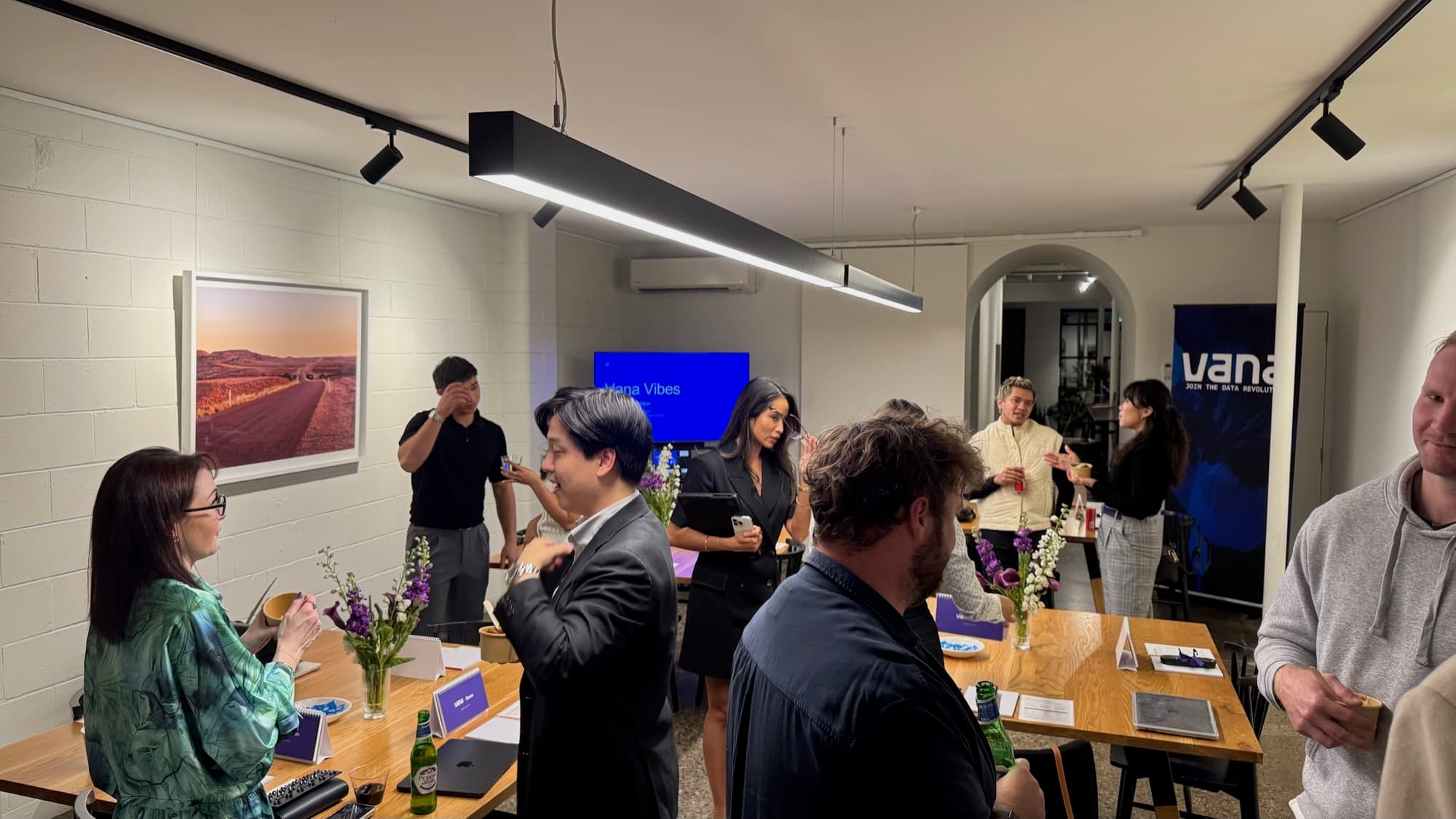
On Thursday 16 July in Brisbane, Open Data Labs ran a session that tested a different model. We took eighteen professionals from nursing, law, accounting, marketing, publishing and professional services, spanning daily AI users to people who had never opened a chatbot, through three hours of hands-on work. Your workforce looks a lot like that room. Three things we saw in that room explain the corporate numbers.
Your training misses because it is about AI, and their day is not
Adult learning research has said this for fifty years. Adults engage when the material is problem-centred, connects to their own experience, and applies immediately. Look at your last AI training module against those three tests.
What the Brisbane room loved most was solving a practical challenge together, one that was relatable without being work. This is why we partnered with the Vana Foundation. Their Vana Vibes series picks a societal problem and invites people to hack at different aspects of it, and this edition picked the cost of housing in participants’ own city.
The first challenge asked every team to draft a tenant’s reply to a steep rent increase. The scenario was fictional, built on Brisbane’s real rental figures, and it worked because rent is a sore subject for almost anyone who lives here. People threw themselves at it without worrying about looking underskilled, because nothing in it touched their actual job.
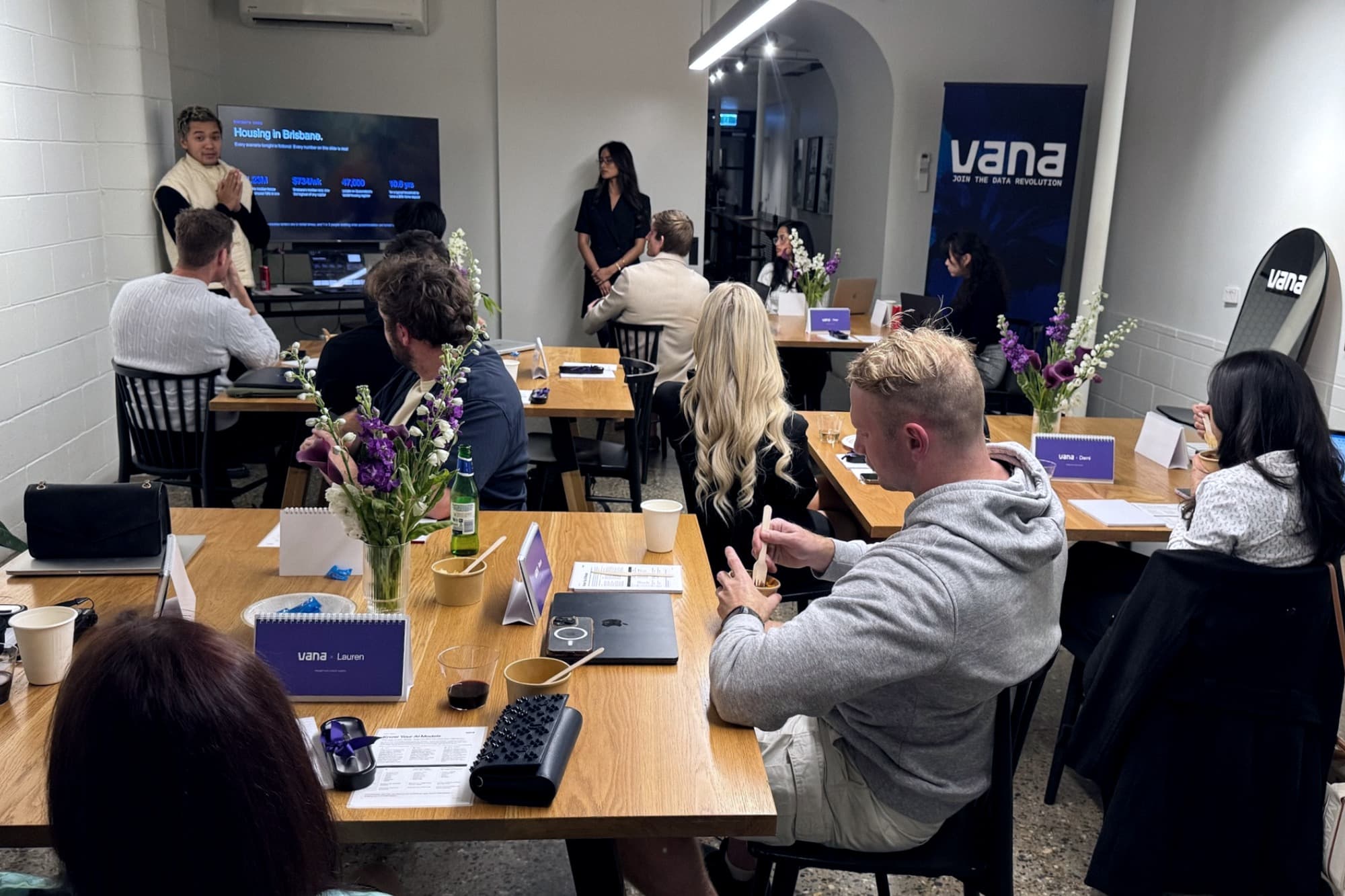
That is the design. Skill and confidence get built on a shared problem with low stakes, then carried into the business problems that matter. Most corporate training starts at the second step and wonders why nobody engages.
Your people use AI at different levels. Put them in the same room.
AI is a different tool to a beginner drafting an email than it is to someone building an app, and useful training has to meet both. We structured the evening as a ladder across four use-case levels: drafting, research, content creation and application building. Everyone found a challenge pitched at their level.
The mixed teams did the rest. Professionals at different levels, deliberately seated together and rotated through the night, taught each other constantly. Most people have never watched a colleague use AI, which is why so few habits ever improve. A publisher taught a table of accountants how she directs tone. A lawyer showed his table how he checks an AI’s legal claims before relying on them. None of that needed a trainer, and the same knowledge is already sitting in your workforce.
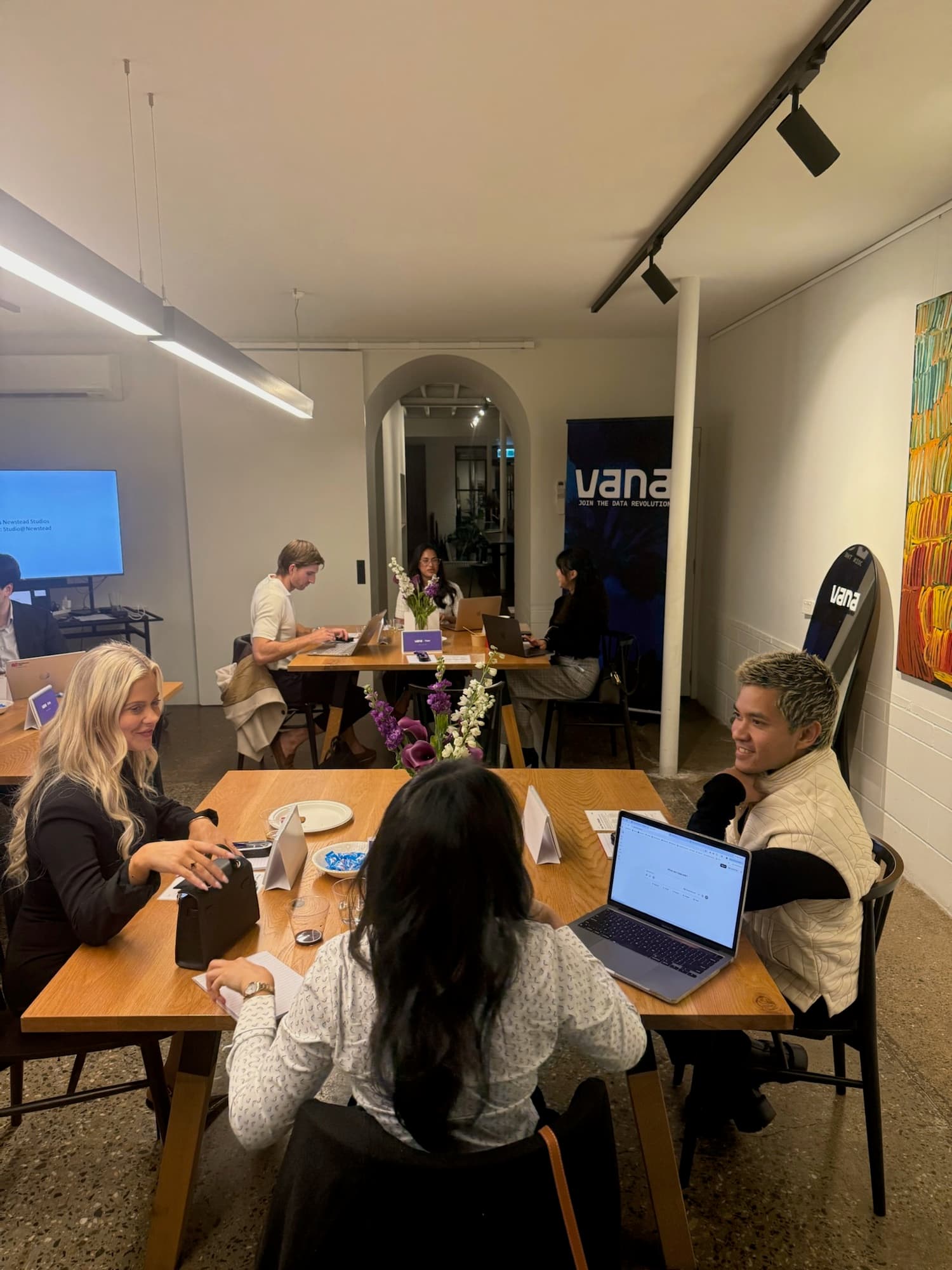
“I normally reach for the same AI tool for everything. The person beside me ran on a completely different set, and she was producing finished content in a few clicks. I wrote her list down on the spot and I’m keen to try all of it.”
Kathy, Customer Success Manager, publishing industry
Your people get creative when they choose their own tools
We deliberately made the session tool-agnostic. Participants could use any AI tool they liked, and that turned out to be one of the things they valued most about the night. People explored beyond their job-mandated suite, compared products across tables, and left with new tools and techniques they chose themselves.
Your organisation is having this experience whether you designed for it or not. MIT’s research found employees at over 90 per cent of firms use personal AI tools at work, while only around 40 per cent of firms have an enterprise subscription at all. Locking the suite down mostly pushes the behaviour out of sight, where the habits are ungoverned and the learning stays private.
Top-down lockdown is one answer to that, and it is usually the wrong one. The Brisbane room points at alternatives that work with the behaviour instead: give people sanctioned space to explore, and teach the data and confidentiality judgement that makes their choices safe. Peers will find and share what works without being asked. We design tool-choice frameworks and capability programs that solve the personal tooling problem without taking the tools away. Choice and security trade off far less than most policies assume.
The same design works inside your organisation
AI capability building works when it is designed the way adults actually learn: peer-focused, active, experimental, staged and social. That is a change management discipline, and it cannot be bought as a licence bundle.
Most of the market sells one side of this. Vendors ship the system; trainers run the module. The failure sits in between, in the fit between a capable tool and the human context it lands in. That seam is the work Open Data Labs does, and we have worked it at both ends of the scale: our team has spent the past decade building and training large distributed workforces for the global AI industry, and we build on the Vana network, open data infrastructure that now serves more than a million people. Brisbane was eighteen people in a room. The design does not change with the number.
It runs on data as much as on AI. Sessions use real datasets, participants learn to interrogate sources and verify claims rather than trust outputs, and the governance conversation covers both the tools and the data moving through them.
Inside an organisation the sequence follows what Brisbane demonstrated. It opens with a shared, relatable challenge that builds skill and confidence across mixed-level teams, then bridges those skills onto your live business problems in staged follow-on sessions. Tool-choice guardrails are co-designed with your security and data teams before anyone opens a laptop. Application is measured at 30, 60 and 90 days, because capability that does not show up in the work a month later was never built.
One session, one problem, your people. That is the smallest way to find out what this looks like in your organisation, and we scope pilot sessions in a 30-minute call.
Vana Vibes Brisbane was delivered by Open Data Labs in collaboration with the Vana Foundation. For training and capacity building enquiries: oshin@opendatalabs.com.
Sources: MIT NANDA, The GenAI Divide: State of AI in Business 2025 (no-return rate; the learning gap; personal AI tool use vs enterprise subscriptions); Study.com workforce AI readiness surveys, March 2026; Docebo, The AI Readiness Gap: The 2026 Enterprise Learning Wake Up Call, April 2026.